
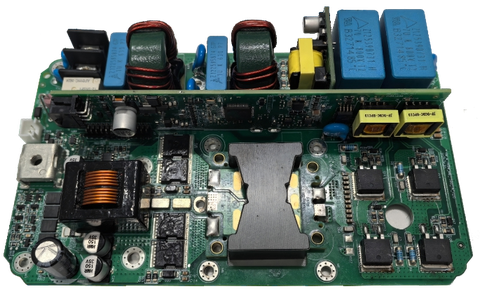
DC-DC POWER CONVERSION
72V DC-DC Module Range
- Catalogue input platform
- 72V
- Catalogue input range
- 50-100 V
- Catalogue output options
- 14, 27.5 V (variant dependent)
Customisation enquiries welcome.
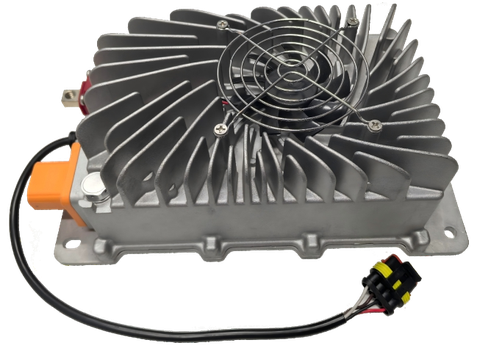
DC-DC POWER CONVERSION
DC-DC converter options for the 72V input platform. Select a catalogue model as the starting point for your voltage, load and installation requirements.
Share the configuration you need. Customisation enquiries are welcome; the final specification and commercial terms are confirmed individually.
Discuss This Model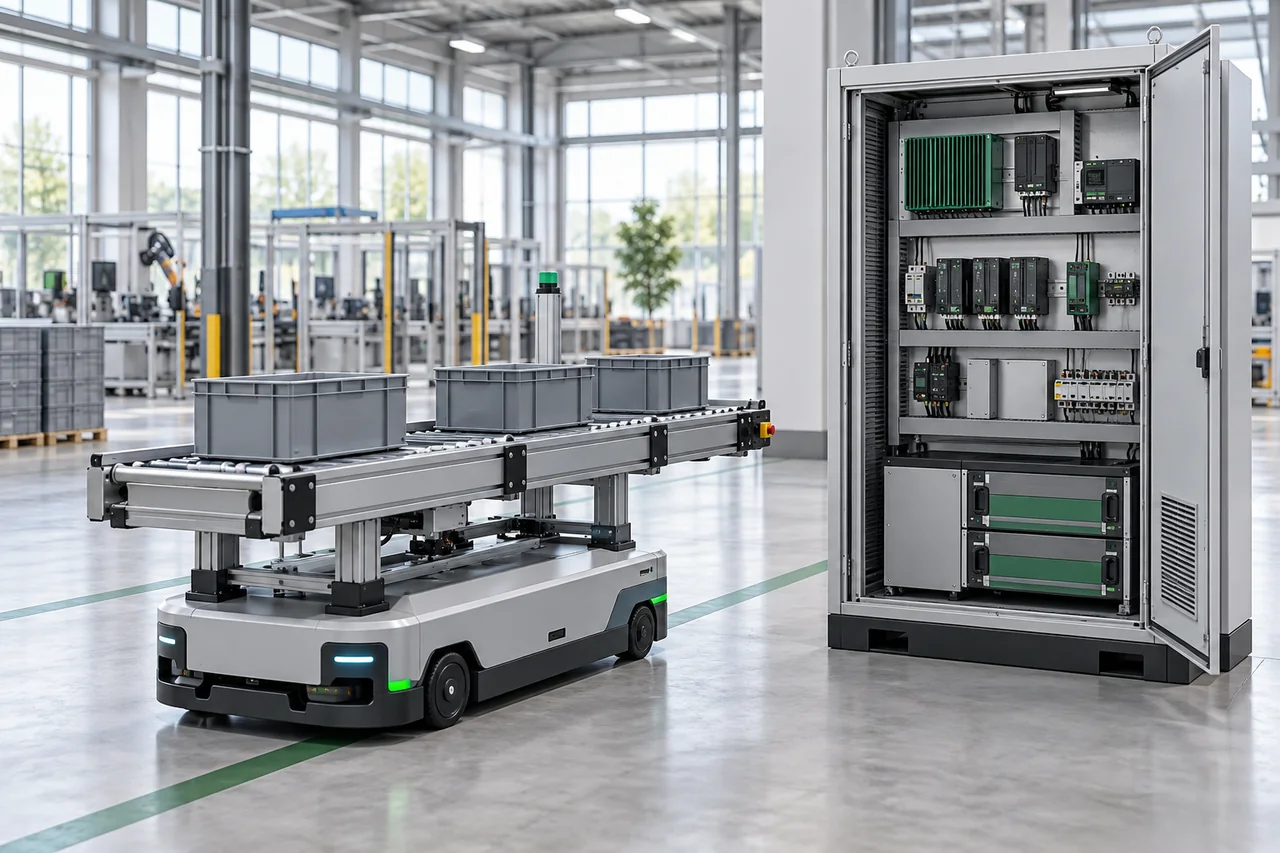
Conceptual application context. The equipment pictured illustrates the application category, not a specific customer vehicle or confirmed product installation.
APPLICATION CONTEXT
Use this industrial equipment scene as context for auxiliary power: conversion from the main DC supply to control, lighting and other specified loads. Vehicle and energy-storage use are catalogue application areas; the image is a concept illustration, not a verified installation of this range.
Construction and agricultural auxiliary-power requirements · Explore equipment applications
The 72V catalogue platform states 50-100 V input and 14, 27.5 V (variant dependent) outputs. Start by checking both steady-state input limits and the load voltage tolerance. Identify transients separately.
This range is presented as an enclosed converter. Begin with the location in the vehicle or equipment: identify envelope clearance, fixing points, cable routes and access to the supplied connections. Ask for a dimensioned enclosure drawing and the configuration-specific connection information.
Specify exposure to temperature, moisture, dust and vibration rather than assuming that a housing provides a particular protection rating. Review the intended heat path and allowable operating conditions. An enclosure does not, by itself, establish an isolation rating, environmental approval or continuous output capability.
The 50–100V window is the first range check for a proposed supply. A source dropping below 50V is outside this published window even if described as a 72V system.
| Catalogue input platform | 72V |
|---|---|
| Catalogue input range | 50-100 V |
| Catalogue output options | 14, 27.5 V (variant dependent) |
| Catalogue rated power | 1.0-2.0 kW |
| Construction | Enclosed converter |
Always specify this voltage platform and construction with the catalogue model. The same label may appear in more than one range.
| Catalogue model | Input (V) | Output (V) | Catalogue current (A) | Rated power (kW) |
|---|---|---|---|---|
| JCDCS1D1210 | 50-100 | 14 | 72 | 1 |
| JCDCS1D1215 | 50-100 | 14 | 108 | 1.5 |
| JCDCS1D2410 | 50-100 | 27.5 | 36 | 1 |
| JCDCS1D2415 | 50-100 | 27.5 | 55 | 1.5 |
| JCDCS1D2420 | 50-100 | 27.5 | 72 | 2 |
This summary reproduces catalogue information. It is not a final engineering datasheet or a certification document.
Download catalogue overview (PDF) · English · Rev 1 · 3 KB
Identify the model and the documents your engineering team needs. We will confirm availability and scope for the proposed configuration.
Customisation is available for discussion. Share your required electrical ratings, communication protocol, connectors, dimensions and operating conditions. Feasibility, the final configuration, evaluation requirements, price and lead time are confirmed individually before an order.
Send Your Customisation RequirementsCONTINUE YOUR PRODUCT REVIEW
These links support comparison; they do not establish interchangeability or approved compatibility.
DC-DC POWER CONVERSION
Customisation enquiries welcome.

DC-DC POWER CONVERSION
Customisation enquiries welcome.
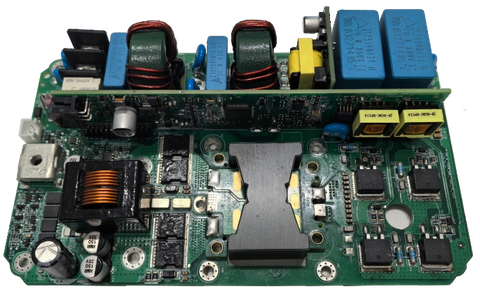
DC-DC POWER CONVERSION
Customisation enquiries welcome.
CONTINUE YOUR ENGINEERING REVIEW
Follow the relevant guide for your procurement scope. A related link does not establish approved compatibility between a component and equipment.
Equipment requirements, sample planning and configuration questions for this catalogue discussion.
Equipment requirements, sample planning and configuration questions for this catalogue discussion.
Review machinery bus limits, load timing and thermal integration.
Prepare input, output, duty and construction requirements before quoting.