
POWER & BATTERY MANAGEMENT
Electric Motorcycle & E-Bike BMS Solutions
Electric motorcycle and e-bike battery projects need a BMS matched to their cell configuration, controller and charging system. Auxiliary lights, displays and control electronics may require a separate DC-DC supply. Specify these functions independently rather than choosing from a nominal battery voltage alone.
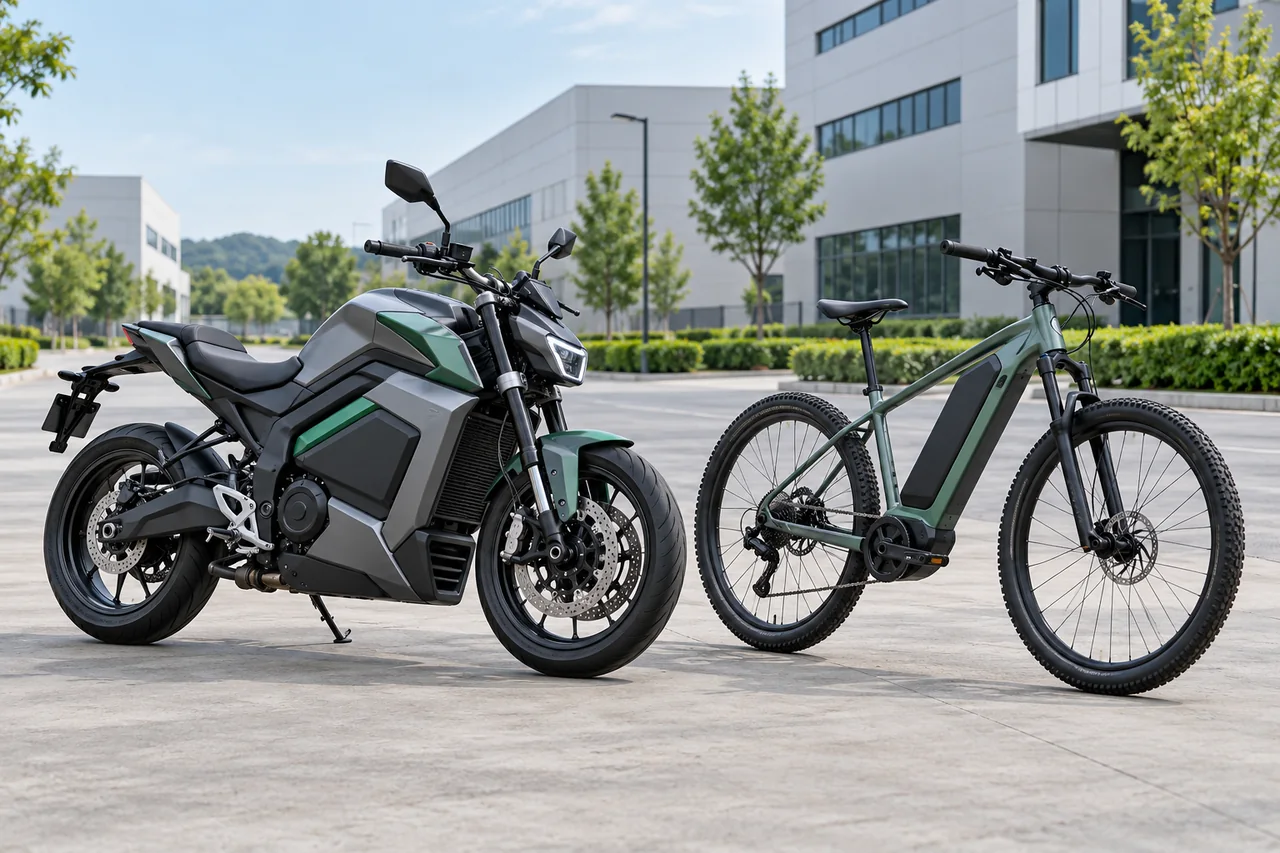
Electric Motorcycle & E-Bike BMS Solutions: selection overview
An electric motorcycle or e-bike BMS needs to match the exact battery pack and controller requirements. Define battery-management functions separately from lighting, display and other auxiliary power needs; nominal pack voltage is only one part of the selection brief.
Practical electric motorcycles & e-bikes use cases
Use these requirement scenarios to prepare a component brief. They are engineering discussion examples, not completed VOLUXIN customer projects.
| Equipment scenario | Operating situation | What to specify |
|---|---|---|
| Electric motorcycle | Acceleration, cruising and accessory loads | Supply pack voltage limits and acceleration current duration; identify the vehicle controller and accessory rail requirements. |
| Electric scooter or e-bike | Compact installation with repeated urban starts | Record space, connections, charging method and intended service conditions; avoid transferring one vehicle configuration to another. |
| Removable battery design | Repeated pack connection and off-vehicle charging | Define connection sequencing, charger identification and mechanical interfaces; review the applicable documentation before testing the pack in the vehicle. |
Engineering knowledge for component selection
Cell count is not established by the voltage label
The supported chemistry and exact series configuration must be confirmed for the selected ordering variant. Provide cell information and maximum/minimum pack limits. Two packs marketed with the same nominal voltage can need different management thresholds and interfaces.
Request the communication document, not only a port name
When a controller needs battery status, ask for message identifiers, units, scaling, update rates and fault behavior. CAN, RS485 or another physical interface does not establish software interoperability. Include charger and dashboard requirements in the same interface review.
Electric motorcycle and e-bike power architecture and operating states
Define traction power, lighting, displays, communications and charging as separate parts of the electric two-wheeler architecture. A motorcycle, e-bike and removable-pack vehicle may have different pack connections and auxiliary loads. Record the operating states that change the component requirements, including parked standby and charger connection.
A removable or swappable battery introduces mechanical contacts, identification and service questions that do not arise in the same way for every fixed pack. Describe the pack connection process, controller wake-up and charger coordination. The OEM must validate the complete vehicle and battery system after selecting components.
Electric motorcycle battery management system: what to confirm
For an electric motorcycle BMS enquiry, supply chemistry, series count, voltage limits, charge and discharge demand, current duration and interface definitions. Clarify the controller or charger messages required. Protection settings and connector geometry need configuration-specific confirmation instead of being inferred from a model name.
Use the BMS selection guide to organize the pack and interface questions, then compare industrial BMS catalogue references. Keep requested functions, published entries and unresolved configuration questions separate in the enquiry.
DC-DC converter for electric two-wheelers: define the rail budget
Provide allowable supply ranges for lights, displays and other accessories, together with their simultaneous and start-up loads. A catalogue output marked 14V should not be renamed as a regulated 12V output. Check accessory tolerance and verify that the proposed converter covers the actual pack window and installation conditions.
Record the minimum and maximum supply values at the proposed component, not only a nominal equipment voltage. Review the DC-DC converter specification guide and DC-DC module versus enclosed converter guide before comparing catalogue construction options.
Electric two-wheeler control pcb fabrication requirements
Two-wheeler control and interface boards need clear mechanical envelopes, connector keep-outs and material requirements. For compact electronics, compare multilayer and HDI routing needs using the actual design. Board fabrication does not include vehicle firmware, pack authentication or completed controller qualification unless separately agreed.
Discuss multilayer PCB manufacturing or HDI PCB fabrication with the actual stack-up, board dimensions, laminate, copper requirements, holes, surface finish and inspection notes. The custom PCB manufacturing quote checklist provides the file and procurement inputs. Bare-board fabrication is distinct from component selection, SMT assembly and finished-device testing.
Sample evaluation for electric motorcycle and e-bike projects
Agree a sample review plan before the order, with the equipment team responsible for defining test conditions and acceptance criteria. The scenarios below are planning examples, not completed customer projects or proof of compatibility.
| Evaluation area | Information and review task |
|---|---|
| Vehicle start with lighting enabled | Document auxiliary rail behavior during traction-system wake-up and accessory operation. |
| Removable battery connection | Agree contact, identification and power-state questions for the proposed pack and vehicle design. |
| Parked standby and charging state | Record which electronic loads remain on and how the charger and controller coordinate the permitted states. |
For each evaluation, record the sample configuration, drawing or interface revision, operating conditions and observed result. Request the available datasheet, mechanical drawing and protocol information before integration. Use the component quality and documentation review to clarify which records accompany the proposed supply.
Electric motorcycle and e-bike OEM quotation: scope, cost and schedule
Pack variations, controller protocol, harness arrangement, mechanical integration and requested reports influence the e-mobility quotation. Compare fixed-pack and removable-pack projects as distinct scopes, including the evaluation quantity and information needed to approve the selected configuration.
Ask the quotation to identify the ordering configuration, quantity, requested documents and unresolved technical points. Confirm whether mechanical, harness, protocol or PCB fabrication requests are included. Compare suppliers using the same brief; a lower price may cover a different scope, interface or evaluation requirement.
For prototype or repeat-production enquiries, state the required sample date and production schedule. Minimum order quantity, customization feasibility and lead time are confirmed individually. The custom component requirements review helps organize the discussion before a configuration is approved.
Avoid common electric motorcycle and e-bike selection mistakes
- Do not equate a nominal voltage label with a complete battery or converter operating range.
- Do not treat a communication connector as an agreed protocol or controller compatibility statement.
- Do not compare current or power entries without their relevant operating conditions.
- Do not infer an enclosure rating, industry certification or complete-system approval from an application photo.
- Do not assume that a bare PCB manufacturing quote includes assembled electronics or firmware.
Resolve these points in the electric motorcycle and e-bike component enquiry using the pack, load and installation information already available. Undecided values can be marked for review.
Further electric motorcycle and e-bike procurement questions
What should an OEM include in a component quote request for electric motorcycle and e-bike?
Define traction power, lighting, displays, communications and charging as separate parts of the electric two-wheeler architecture. A motorcycle, e-bike and removable-pack vehicle may have different pack connections and auxiliary loads. Record the operating states that change the component requirements, including parked standby and charger connection. Include the evaluation quantity, expected production volume, target dates and the documents needed to approve the configuration.
Can I request a custom electric two-wheeler control PCB?
Two-wheeler control and interface boards need clear mechanical envelopes, connector keep-outs and material requirements. For compact electronics, compare multilayer and HDI routing needs using the actual design. Board fabrication does not include vehicle firmware, pack authentication or completed controller qualification unless separately agreed. Provide stack-up, material, copper, hole, finish and inspection requirements for a bare-board manufacturing review.
How should electric motorcycle and e-bike sample evaluation be planned?
Document auxiliary rail behavior during traction-system wake-up and accessory operation. Agree operating conditions and acceptance criteria with the equipment designer. Record the sample configuration and requested datasheet or protocol revision; component supply does not establish complete-system approval.
What affects electric motorcycle and e-bike component cost and lead time?
Pack variations, controller protocol, harness arrangement, mechanical integration and requested reports influence the e-mobility quotation. Compare fixed-pack and removable-pack projects as distinct scopes, including the evaluation quantity and information needed to approve the selected configuration. MOQ, customization feasibility and delivery timing are confirmed in the quotation for the agreed scope.
Prepare your OEM component enquiry
Equipment manufacturers, battery-pack integrators and procurement teams can use this checklist to separate known design inputs from questions that still need confirmation.
- Cell data and exact pack arrangement
- Acceleration current, duration and charging duty
- Controller/dashboard/charger interface definitions
- Auxiliary rail voltage, start-up load and source limits
- Pack connection sequence, dimensions and service environment
Include project stage, evaluation quantity, expected order volume and requested delivery timing. Request the configuration-specific datasheet, mechanical drawing and interface information, then agree sample acceptance criteria. Available customisation and document scope are confirmed for the proposed configuration.
OEM selection questions
How do I specify a BMS for an electric motorcycle battery pack?
Start with cell chemistry, series and parallel arrangement, pack voltage limits, acceleration and charging duty, controller messages and installation drawing. Confirm the exact catalogue reference and configuration before treating it as a vehicle-ready option.
Can a 72V DC-DC converter range be selected from a vehicle voltage label?
No. The published 72V platform has a 50–100V input window. Compare the full source window and the actual output option with the accessory requirements; lower-voltage or out-of-window packs need a separate configuration review.
Related application guides
Industry background: Infineon battery management for light electric vehicles. External guidance explains component roles; VOLUXIN ordering specifications and compatibility require separate confirmation.
Component roles in the equipment
Battery pack → BMS monitoring and protection → equipment power distribution
Main DC supply → DC-DC converter, where required → auxiliary loads
Functional overview only; the final electrical design is project-specific.
Prepare the electric motorcycles & e-bikes requirements
| Project area | Information to record | Selection question |
|---|---|---|
| Traction & charging | Continuous discharge, acceleration peaks and duration, charge current and charger behaviour. | Which current paths and protection settings are required? |
| Battery architecture | Chemistry, cell data, series count and voltage limits over the full operating cycle. | Does the proposed configuration match the actual cells? |
| Controller messages | Required CAN/RS485 or other protocol, message definitions, fault response and pinout. | Can the required application-level communication be agreed? |
| Vehicle packaging | Battery space, cables, vibration exposure, water exposure and thermal arrangement. | What installation documents and evaluation are needed? |
Review two catalogue references for distinct vehicle types
BM72-MPS1 is listed for 72V electric motorcycles, with a 17–20S series-count entry and a 50A catalogue current entry whose charge/discharge duty is not separated. B16MPX1 is listed for 24V/36V/48V electric bicycles, with 7–16S and 25A discharge / 10A charge entries.
These are separate starting references. The catalogue does not confirm every cell chemistry, voltage-to-series mapping, controller protocol or installed duty cycle.
Specify lights and electronics by their actual voltage tolerance
For a proposed 72V auxiliary supply, the 72V enclosed converter range lists 50–100V input and 14V or 27.5V output options. A 14V output is not a guaranteed replacement for a strict 12V load. Request the exact output tolerance and transient behaviour your lights, display and controller require. Lower-voltage vehicle batteries need their own input-range review.
Build an evaluation and procurement brief
Share the equipment type, project stage, battery or DC supply limits, load measurements and interface documents. Separate confirmed requirements from open questions. Include evaluation quantity, intended order volume and target timing so sample availability, development scope and commercial terms can be reviewed.
Ask for the configuration-specific specification, applicable drawing, connector pinout and communication information. Agree evaluation responsibilities, acceptance criteria and how results will be recorded before placing an order. Our quality and documentation checklist provides the review path.
BMS selection guide · DC-DC specification guide · Download the project requirements worksheet
Application questions
Is BM72-MPS1 suitable for every 72V motorcycle battery?
No. Confirm the chemistry, exact series count, pack voltage limits, current duty, charger and controller requirements for the proposed configuration.
Does CAN or RS485 imply controller compatibility?
No. An interface entry is only a starting point. Protocol, messages, baud rate, pinout and fault behaviour need configuration-specific agreement.
Can the 14V DC-DC output be called a 12V supply?
No. Confirm the load voltage tolerance and the converter output specification. If a strict 12V rail is needed, request that output explicitly.
Industry reading
E-two-wheeler BMS overview — Microchip. General industry context; VOLUXIN product selection is based on its own configuration-specific documents.
Explore all BMS & DC-DC applications
Published by VOLUXIN · Updated 1 October 2026.
CUSTOM PCB FABRICATION
PCB manufacturing for your electronics project
For equipment-specific control, sensing or interface boards, discuss multilayer or HDI PCB fabrication using your design data. Board manufacture and BMS or DC-DC component selection are separate scopes; system performance must be validated in the equipment.
Explore PCB manufacturing → Discuss PCB requirements →VOLUXIN ENGINEERING REFERENCES
Compare products and prepare your technical brief
Read catalogue comparison tables and procurement worksheets online, or download an editable CSV. Reference tables reproduce published entries; worksheets are blank review aids, not test results or final engineering specifications.
| Reference | Purpose |
|---|---|
| BMS requirements worksheet | Pack, load duty, ports, protocol and mechanical information for a custom BMS enquiry. |
| DC-DC load review worksheet | Source window, auxiliary loads, cooling and evaluation conditions. |
VOLUXIN editorial references · Worksheets updated 5 October 2026; catalogue reference tables dated 2 October 2026. BMS/DC-DC values are based on supplied product catalogues; PCB entries use the 2026 fabrication reference. Request configuration-specific drawings, protocols and evaluation records for the quoted scope.
Tell us what your equipment needs.
Share your application, product requirements and any details you have already confirmed. We can then discuss the available options.
Discuss Your Requirements