
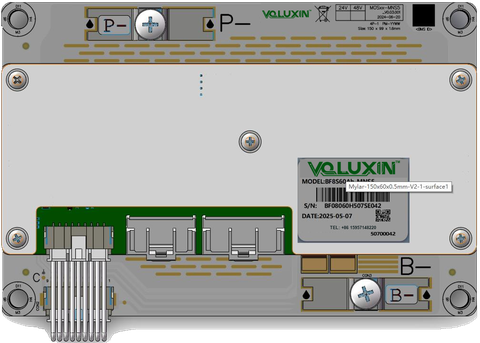

POWER & BATTERY MANAGEMENT
Custom BMS, DC-DC & PCB Manufacturing Support
Plan custom BMS configurations, DC-DC auxiliary power and bare PCB manufacturing with VOLUXIN. Equipment manufacturers, battery-pack integrators and electronics procurement teams can review these three distinct supply scopes using a clear technical brief.
Choose a catalogue reference, describe a component requirement or bring your own PCB fabrication specification. Confirm feasibility, responsibilities, evaluation needs and quotation scope before approving an order.
Three routes for your custom electronics project
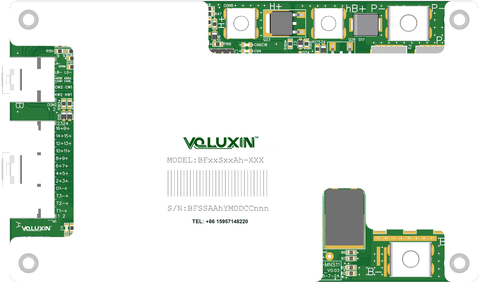
Custom BMS
Define battery architecture, current duty, controller interfaces and mechanical integration.

Custom DC-DC
Specify the actual source window, output rails, load timing, cooling and construction.
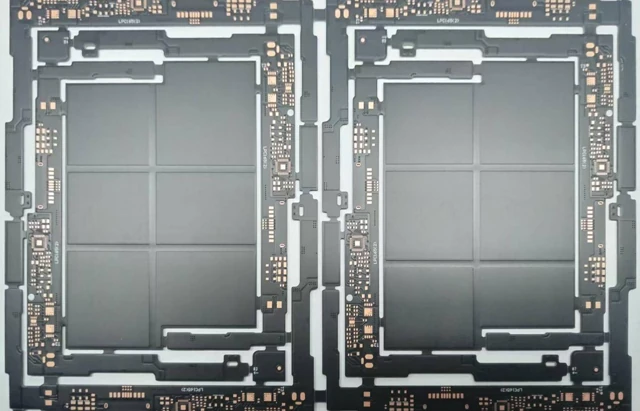
Custom PCB manufacturing
Prepare multilayer or HDI bare-board fabrication data, materials and inspection requirements.
Standard supply or a custom configuration?
| Project route | A useful starting point | What to agree |
|---|---|---|
| Catalogue product supply | A published BMS model or DC-DC range matches much of the requirement. | Exact model, option set, electrical ratings, interfaces and document revision. |
| Modified configuration | A reference product is close, but a connector, communication or mechanical requirement differs. | Requested changes, feasibility, evaluation scope and any development cost. |
| Custom project enquiry | The requirement goes beyond the published catalogue. | Technical scope, design responsibilities, deliverables, qualification needs and commercial proposal. |
| Custom bare PCB fabrication | Your approved board design needs a manufacturing review. | Stack-up, material, fabrication data, tolerances, inspection and quantity. |
Custom BMS for industrial battery packs
A battery management system needs to match the pack and the way the equipment charges, discharges and communicates. Tell us whether the application is an AGV, warehouse vehicle, electric forklift or another industrial battery-powered system.
| Requirements to share | Configuration discussion |
|---|---|
| Battery architecture | Cell chemistry, cell data, exact series count, pack voltage limits and capacity. |
| Current & protection | Continuous charge and discharge duty, peak current and duration, fault response and temperature requirements. |
| Communication & control | CAN or RS485 requirements, message definitions, baud rate, controller integration and required monitoring functions. |
| Mechanical integration | Board or enclosure preference, available space, connector pinout, cables and mounting points. |
Monitoring, balancing, protection settings and firmware requests can be included in the brief. The supported functions and chemistry-to-series mapping are confirmed for the proposed configuration.
Browse industrial BMS catalogue references · Review the BA48-MNS11 AGV reference · Read the BMS selection guide
Custom DC-DC converters for auxiliary power
A custom DC-DC converter enquiry should define the full supply window and the loads it must power. Review module and enclosed constructions against the installation, cooling and service requirements.
| Requirements to share | Configuration discussion |
|---|---|
| Input voltage | Minimum, nominal and maximum DC supply; transients identified separately. |
| Output & load | Required voltage rails, continuous current, start-up demand, duty cycle and permitted ripple. |
| Control & protection | Enable signals, fault indication, protection behaviour and any isolation or grounding requirement. |
| Installation & environment | Dimensions, mounting, connectors, cooling arrangement, ambient conditions and required EMC evaluation. |
The catalogue covers six nominal input platforms from 72V to 800V, with module and enclosed options. Each range has its own actual input window and output choices. Use the exact model table to shortlist a reference; the nominal platform is not a universal operating range.
Explore DC-DC modules and converters · Compare module and enclosed constructions · Prepare a DC-DC specification
Custom PCB manufacturing for power and control electronics
PCB fabrication extends the manufacturing options available to your electronics project. Share a rigid multilayer or HDI board specification for a design-specific review. This route covers bare printed circuit boards; the board design, component selection and complete-system validation remain clearly defined project responsibilities.
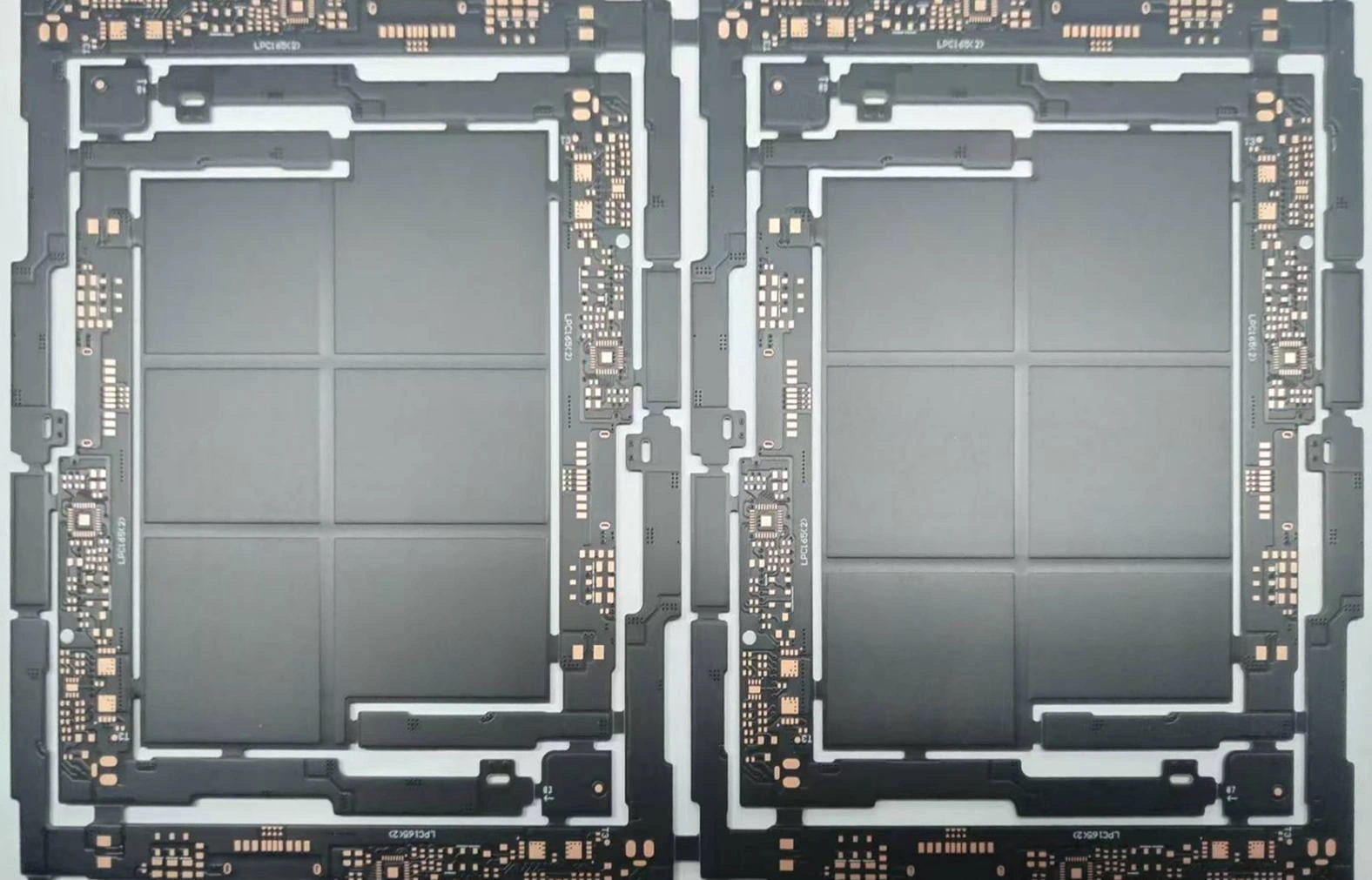
Multilayer PCB fabrication
Review copper layers, dielectric spacing, power and signal routing, plated holes and board geometry for your rigid-board design.
HDI PCB fabrication
Discuss microvias, fine-pitch routing, build-up construction and via filling where the compact design requires them.
Prepare the PCB manufacturing specification
Give the purchasing and engineering teams one agreed board brief. Undecided items can remain marked for review; layer count or a material label alone cannot define a complete fabrication order.
| PCB manufacturing input | Information to agree |
|---|---|
| Board and revision | Drawing reference, revision, intended use, outline, dimensions, slots and mounting features. |
| Stack-up and thickness | Copper-layer sequence, dielectric spacing, finished thickness and relevant tolerances. |
| Material and copper | Laminate grade and starting or finished copper requirements by layer. |
| Holes and vias | Plated and non-plated holes, finished sizes, microvia structure and any filled or capped features. |
| Finish and mask | Requested surface finish, solder mask, exposed pads and contact features. |
| Impedance and panel | Target values, tolerances, test coupons, panel layout and tooling instructions where applicable. |
| Inspection and quantity | Bare-board electrical testing, optical inspection, requested records, sample/production quantities and target schedule. |
DFM review and agreed manufacturing scope
Prepare Gerber or another agreed fabrication format, drill files, outline and stack-up notes. Resolve missing layers, contradictory dimensions, drill-to-copper constraints and special-feature questions before approving production. Design for manufacturability addresses fabrication; it does not replace circuit simulation, firmware development or equipment validation.
For BMS sensing boards, DC-DC power boards and industrial interfaces, identify current paths, insulation geometry, thermal constraints and connector keep-outs in the design. Available materials, feature limits and lead times are confirmed for the proposed build rather than inferred from an application name.
PCB quality records and sample approval
Agree the optical inspection and bare-board electrical test requirements. Where the design calls for them, specify impedance coupons, microsection sampling and report criteria. Request current qualification documents for the quoted manufacturing scope. Certificates must retain their actual issuing entity and applicable scope.
Approve the board revision and any material substitutions in writing before repeat orders. Component sourcing, SMT assembly, PCBA, firmware and finished-device functional testing are separate scopes and are not included in a bare-board fabrication quotation.
Custom PCB manufacturing and quote checklist · PCB fabrication capabilities and quality review
Start with non-confidential requirements. Arrange design-file exchange through info@voluxin.com before sending proprietary data; this page does not provide public file uploads.
Specify the component around your equipment
- AGV & AMR: record pack architecture, docking and charging behaviour, controller messages and auxiliary loads.
- Material handling & electric forklifts: separate driving, lifting and charging duty; record integration space and service access.
- Industrial electrification: define DC supply limits, output rails, installation and environmental conditions.
A clear process from technical brief to order
| Stage | What happens | Decision or record |
|---|---|---|
| 01 · Requirements | Share your application, component or PCB specification, project stage, quantity and target timing. Open questions can remain marked as open. | A project brief with confirmed requirements and items to review. |
| 02 · Scope review | Discuss a catalogue starting point or custom scope, interfaces and project constraints. | Feasible configuration, proposed responsibilities and commercial assumptions. |
| 03 · Evaluation planning | Agree sample availability, costs, test conditions and who performs each check. | An evaluation plan with acceptance criteria and required documents. |
| 04 · Configuration approval | Review the component specification, drawing, pinout and protocol, or the approved PCB fabrication files and stack-up. | An agreed configuration and document revision for procurement. |
| 05 · Supply agreement | Confirm order quantity, price, lead time, delivery terms and how future changes will be handled. | The order specification and commercial agreement. |
Sample and prototype needs are discussed before evaluation. Development stages, timing and charges depend on the agreed project scope.
Documents and approvals that build purchasing confidence
A clear paper trail makes a component easier to evaluate and reorder. Identify the records your engineering and procurement teams need, and confirm their availability for the proposed configuration.
- Configuration specification: operating ranges, ratings, supported functions and applicable revision.
- PCB manufacturing records: approved fabrication data, stack-up, materials, tolerances and agreed inspection scope where a bare-board order is included.
- Integration documents: mechanical drawing, mounting details, connector pinout and communication information, where applicable.
- Evaluation records: agreed test conditions, acceptance criteria, responsibilities and results to be supplied.
- Compliance evidence: any required report or certificate, with its issuing body, date and exact model scope.
- Commercial and revision control: quantity, price, timing, change approval and the configuration used for repeat orders.
Review the quality and documentation checklist. Certificates and test results must relate to the specific model and configuration; website catalogue summaries do not replace them.
START WITH A CLEAR PROJECT BRIEF
Download the equipment requirements worksheet
Record the battery or DC supply, loads, interfaces, installation limits and open questions in one editable file.
Custom BMS, DC-DC and PCB manufacturing FAQ
Can VOLUXIN supply a custom battery management system?
Yes. Send your application, cell chemistry, series count, current duty and communication requirements. VOLUXIN can discuss a catalogue-based or custom BMS configuration; feasibility and the final scope are confirmed for your project.
Can I request a custom DC-DC converter output voltage?
Yes. Provide the full input voltage window, required output voltage, continuous load and start-up demand. Output changes, isolation requirements and installation constraints are reviewed together before a configuration is proposed.
Can a BMS use CAN or RS485 communication?
Several catalogue references list CAN or RS485 interfaces. The interface entry alone does not establish protocol compatibility. Share your message definitions, baud rate, connector pinout and controller requirements so the specific configuration can be reviewed.
Is LiFePO4 or lithium-ion BMS compatibility confirmed by a voltage label?
No. The exact cell chemistry, series count and protection settings must be confirmed together. Include cell data and pack limits in your enquiry; a 24V or 48V label alone is insufficient.
What are the MOQ, sample lead time and development costs?
Minimum order quantity, sample availability, development or tooling costs, delivery schedule and payment terms are quoted for the agreed configuration and quantity. Include your evaluation quantity, planned order volume and target date to help define a practical proposal.
Which documents should I request before an order?
Request the configuration-specific specification, applicable drawing, connector pinout and communication information. Identify the test reports and compliance documents required for your market. Availability and scope are confirmed per configuration; a catalogue overview is not a certification report.
How do we handle OEM, ODM or confidential design requirements?
Describe the requested branding, design responsibilities, firmware scope, document ownership and change control. Start with a non-confidential brief. Ask about an NDA and a suitable document exchange process before sending proprietary files; these terms require agreement.
Can I include PCB manufacturing in a custom electronics enquiry?
Yes. VOLUXIN handles bare multilayer and HDI PCB fabrication enquiries alongside BMS and DC-DC component requirements. Specify each scope separately, with the board design, manufacturing inputs, sample quantities and inspection needs.
What files should I prepare for custom PCB fabrication?
Prepare Gerber or another agreed manufacturing format, drill files, the board outline, stack-up and fabrication notes. Add material, copper, finish, impedance and panel requirements where relevant. Start with a non-confidential brief and arrange document exchange before sending proprietary files.
Does PCB manufacturing include SMT assembly, PCBA or firmware?
No. A bare-board manufacturing quote covers the agreed fabrication and inspection scope. Component sourcing, SMT assembly, PCBA, firmware and finished-device functional testing need a separate scope review and are not promised as part of these PCB services.
How do we approve custom PCB samples and production?
Agree the board revision, manufacturing specification, sample quantity and inspection records before fabrication. Your design team should evaluate mechanical fit and circuit performance. Confirm any material substitutions and the approved fabrication revision before repeat production.
Tell us what your component or PCB project needs
Send the application, electrical limits, required interfaces, quantity and target date. If a requirement is still undecided, tell us what you know and what needs review.
Request a BMS or DC-DC QuoteRequest a PCB Manufacturing Quote
VOLUXIN · HANGZHOU VOLUXIN TECHNOLOGY CO., LTD.
info@voluxin.com · +86 15957148220
For proprietary designs, first ask about an NDA and an agreed document exchange process. Read the privacy notice.
Published by VOLUXIN · Updated 1 October 2026. Final supply and customisation scope is defined by the agreed configuration and project documents.
Manufacturing and evaluation review
Explore the BMS, DC-DC and bare PCB scopes, sample approval stages and quality documents relevant to your project.
Concept illustrations explain review themes. Confirm the manufacturing and test scope, available records and acceptance conditions for the quoted project.
Explore manufacturing and quality capabilities →VOLUXIN ENGINEERING REFERENCES
Compare products and prepare your technical brief
Read catalogue comparison tables and procurement worksheets online, or download an editable CSV. Reference tables reproduce published entries; worksheets are blank review aids, not test results or final engineering specifications.
| Reference | Purpose |
|---|---|
| BMS requirements worksheet | Pack, load duty, ports, protocol and mechanical information for a custom BMS enquiry. |
| DC-DC load review worksheet | Source window, auxiliary loads, cooling and evaluation conditions. |
| PCB DFM input checklist | Fabrication revision, stack-up, drill definitions and inspection requirements. |
VOLUXIN editorial references · Worksheets updated 5 October 2026; catalogue reference tables dated 2 October 2026. BMS/DC-DC values are based on supplied product catalogues; PCB entries use the 2026 fabrication reference. Request configuration-specific drawings, protocols and evaluation records for the quoted scope.
VOLUXIN · CUSTOM PROJECT REVIEW
Custom BMS engineering: from battery pack to vehicle interface
Start with a catalogue model and build a battery management system brief around the equipment. VOLUXIN reviews the required configuration with the manufacturing resources for the project; the supplied product handbook provides the model references below.
On small screens, scroll the table horizontally to view every review item.
| Review area | Catalogue-backed starting point | Your customisation input |
|---|---|---|
| Battery pack and charging | Series-count options, separate/common charge-discharge ports and application-specific current entries appear in the handbook. | Provide chemistry, exact series count, charger limits and separate traction, lifting and charging duty. |
| Protection architecture | Industrial-vehicle entries describe cell-voltage, temperature, overcurrent and short-circuit protection; MOS/relay disconnection varies by model. | Define fault thresholds, timing, reset behaviour and the required disconnect path for review. |
| Vehicle communication | Selected models list isolated CAN, CAN/485 or UART options. | Supply the controller message list, required isolation and charger interaction; agree the protocol revision. |
| Packaging and integration | The handbook gives model-specific envelope dimensions and port arrangements. | Request the drawing, connector pinout and mounting details for the ordering configuration. |
Handbook references describe selected models, not universal features. Chemistry mapping, installed duty and safety evidence are reviewed for the exact design.
VOLUXIN · CUSTOM PROJECT REVIEW
Custom DC-DC power conversion: define the complete supply path
A custom DC-DC converter must be matched to both the battery source and the auxiliary loads. The supplied power-conversion catalogue describes module and enclosed constructions, wiring options, cooling approaches and protection topics that can be reviewed for a VOLUXIN enquiry.
On small screens, scroll the table horizontally to view every review item.
| Review area | Catalogue-backed starting point | Your customisation input |
|---|---|---|
| Electrical platform | The catalogue separates nominal-voltage platforms and model/output rows. | Specify minimum/maximum input, start-up conditions, each output rail and continuous versus transient load. |
| Control and diagnostics | The solution pages describe CAN configuration and bootloader, UDS and OTA functions. | Identify required control, diagnostic and update functions; availability depends on the selected design. |
| Protection and insulation | Solution pages describe overload, reverse-input, short-circuit, overvoltage and overtemperature protection and input-to-case insulation checks. | Agree fault response and the precise insulation test boundaries; input-to-case data alone do not establish input-to-output isolation. |
| Mechanical and thermal integration | The catalogue describes natural/air cooling and flying-lead or connector arrangements. | Provide enclosure space, mounting, ambient conditions and airflow; request output and efficiency evaluation at those conditions. |
Family-level efficiency, enclosure and compliance statements are not assigned to every catalogue model. The quotation and configuration-specific records define the agreed scope.
VOLUXIN · CUSTOM PROJECT REVIEW
Custom PCB fabrication: match your design to the manufacturing route
Use the 2026 fabrication reference to prepare a multilayer PCB or HDI PCB enquiry. The limits below are manufacturing-reference entries for design review, not a promise that all limits can be combined on one board.
On small screens, scroll the table horizontally to view every review item.
| Review area | Catalogue-backed starting point | Your customisation input |
|---|---|---|
| Through-hole multilayer | Up to 28 layers; finished thickness 0.5–4.5 mm; copper entries 1/3–6 oz. | Submit layer sequence, laminate requirements and copper distribution for a stack-up review. |
| HDI construction | Up to 14 layers; 1–3 build-up stages; finished thickness 0.3–2.4 mm. | Provide the via structure and build-up sequence; quote against the approved fabrication revision. |
| Geometry and drilling | Through-hole reference: inner 2/2 mil and outer 2.3/2.3 mil trace/space; minimum drill bit 8 mil. | State finished plated-hole dimensions and tolerances separately from drill-bit sizes. |
| Materials, finish and inspection | FR-4 material categories and OSP, immersion-gold, lead-free HASL and gold-finger finish entries are documented. | Specify the exact material and finish; agree electrical test, impedance and microsection records as applicable. |
Only the 2026 reference is used. Later capability and capacity plans are excluded. Ambiguous source units are not used as design limits.
Tell us what your equipment needs.
Share your application, product requirements and any details you have already confirmed. We can then discuss the available options.
Discuss Your Requirements