
POWER & BATTERY MANAGEMENT
Forklift, Pallet Truck & Stacker BMS Solutions
Electric pallet trucks, stackers and counterbalance forklifts place different demands on a battery management system. Record the battery configuration and driving, lifting and charging duties before using a catalogue current value to shortlist a BMS.
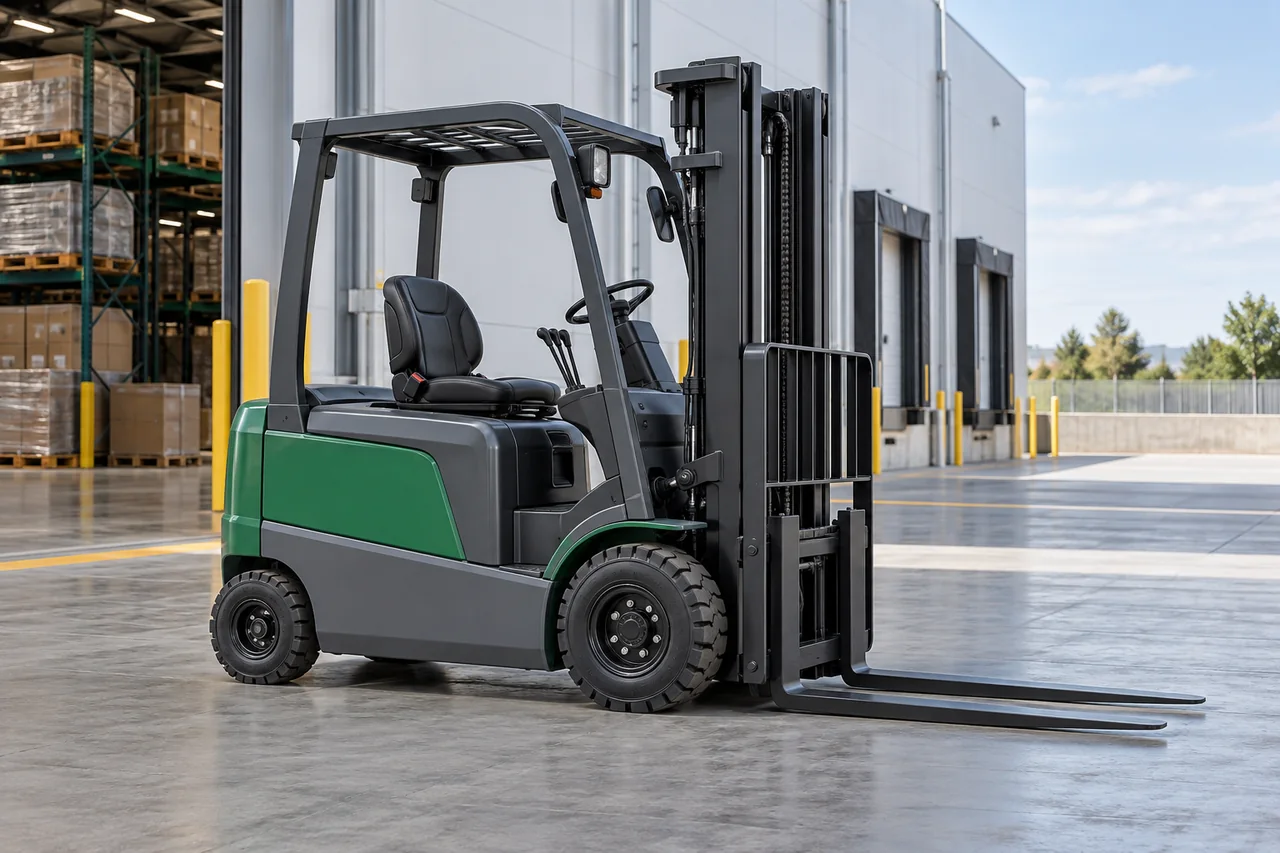
Forklift, Pallet Truck & Stacker BMS Solutions: selection overview
A forklift battery BMS should be reviewed against the actual traction, lifting and charging cycle. Pallet trucks, stackers and counterbalance vehicles can impose different current and interface requirements even when their nominal pack voltage is the same.
Practical material handling use cases
Use these requirement scenarios to prepare a component brief. They are engineering discussion examples, not completed VOLUXIN customer projects.
| Equipment scenario | Operating situation | What to specify |
|---|---|---|
| Electric pallet truck | Frequent loaded starts and short travel distances | Capture acceleration peaks and operator-control behavior; confirm pack current paths and service connections. |
| Electric stacker | Travel followed by repeated loaded lifting | Record hydraulic-pump or lift-motor demand alongside traction duty; distinguish short lift peaks from sustained operation. |
| Counterbalance forklift | Mixed driving, lifting and multi-shift charging | Provide a shift-duty profile, cooling environment and charging schedule; review the exact BMS ordering configuration and vehicle protocol. |
Engineering knowledge for component selection
Continuous current and lift peaks are different inputs
A catalogue current figure does not describe every lift cycle. Include current traces, peak duration, repetition rate and ambient conditions in the requirement. Ask how the proposed configuration is evaluated for that duty and what mounting or thermal conditions apply.
Keep battery control separate from vehicle safety control
A battery-management interface supplies pack-related status and permissions. Vehicle braking, lift interlocks and other machine safety functions require their own design and validation. A referenced BMS must not be presented as certification of the complete industrial truck.
Forklift, pallet truck and stacker power architecture and operating states
Split the warehouse-vehicle duty into travel, lifting, steering, controls and charging. A pallet truck, pedestrian stacker and counterbalance forklift can use different motor combinations and operating cycles. Record simultaneous loads and the duration of each event before choosing battery-management current entries.
Charging between work periods, operator changes and storage conditions can affect the operating brief. Identify the charger connection, service disconnect and equipment interlocks. Mechanical fit, access to connectors and cable routing are procurement requirements, not details to postpone until samples arrive.
Forklift battery bms: what to confirm
Describe the exact pack rather than relying on a 24V or 48V vehicle label. Confirm chemistry, cell count, charge and discharge conditions, temperature-sensing requirements and protection coordination. Published catalogue current entries need the relevant operating conditions before an engineer can judge a proposed load.
Use the BMS selection guide to organize the pack and interface questions, then compare industrial BMS catalogue references. Keep requested functions, published entries and unresolved configuration questions separate in the enquiry.
DC-DC auxiliary power for warehouse equipment: define the rail budget
List the display, lights, sensors, telemetry and controller loads separately from the traction and lift circuits. State the actual input window and allowable auxiliary output tolerance. A converter family named after a voltage platform must still cover the required battery range; a low-voltage warehouse pack may require a configuration outside the published ranges.
Record the minimum and maximum supply values at the proposed component, not only a nominal equipment voltage. Review the DC-DC converter specification guide and DC-DC module versus enclosed converter guide before comparing catalogue construction options.
Warehouse equipment control pcb fabrication requirements
Custom control and interface boards need connector placement, mounting holes, clearances and panel instructions. Provide the design requirements for power and signal separation, as well as materials, copper and board thickness. A bare-board order does not include motor-control firmware or a finished vehicle control module.
Discuss multilayer PCB manufacturing or HDI PCB fabrication with the actual stack-up, board dimensions, laminate, copper requirements, holes, surface finish and inspection notes. The custom PCB manufacturing quote checklist provides the file and procurement inputs. Bare-board fabrication is distinct from component selection, SMT assembly and finished-device testing.
Sample evaluation for forklift, pallet truck and stacker projects
Agree a sample review plan before the order, with the equipment team responsible for defining test conditions and acceptance criteria. The scenarios below are planning examples, not completed customer projects or proof of compatibility.
| Evaluation area | Information and review task |
|---|---|
| Repeated lift and travel cycle | Capture combined travel and lifting demand under the proposed operating cycle. |
| Shift charging and service restart | Document charger connection states and the equipment restart procedure for engineering review. |
| Warehouse accessory expansion | Add new lighting or telemetry loads to the rail budget and recheck auxiliary power demand. |
For each evaluation, record the sample configuration, drawing or interface revision, operating conditions and observed result. Request the available datasheet, mechanical drawing and protocol information before integration. Use the component quality and documentation review to clarify which records accompany the proposed supply.
Forklift, pallet truck and stacker OEM quotation: scope, cost and schedule
A forklift battery BMS enquiry should distinguish pack-monitoring configuration, interface requirements, mechanical or harness changes and requested inspection records. Order size, sample stage and target delivery date belong in the same brief so the quotation covers a defined equipment project.
Ask the quotation to identify the ordering configuration, quantity, requested documents and unresolved technical points. Confirm whether mechanical, harness, protocol or PCB fabrication requests are included. Compare suppliers using the same brief; a lower price may cover a different scope, interface or evaluation requirement.
For prototype or repeat-production enquiries, state the required sample date and production schedule. Minimum order quantity, customization feasibility and lead time are confirmed individually. The custom component requirements review helps organize the discussion before a configuration is approved.
Avoid common forklift, pallet truck and stacker selection mistakes
- Do not equate a nominal voltage label with a complete battery or converter operating range.
- Do not treat a communication connector as an agreed protocol or controller compatibility statement.
- Do not compare current or power entries without their relevant operating conditions.
- Do not infer an enclosure rating, industry certification or complete-system approval from an application photo.
- Do not assume that a bare PCB manufacturing quote includes assembled electronics or firmware.
Resolve these points in the forklift, pallet truck and stacker component enquiry using the pack, load and installation information already available. Undecided values can be marked for review.
Further forklift, pallet truck and stacker procurement questions
What should an OEM include in a component quote request for forklift, pallet truck and stacker?
Split the warehouse-vehicle duty into travel, lifting, steering, controls and charging. A pallet truck, pedestrian stacker and counterbalance forklift can use different motor combinations and operating cycles. Record simultaneous loads and the duration of each event before choosing battery-management current entries. Include the evaluation quantity, expected production volume, target dates and the documents needed to approve the configuration.
Can I request a custom warehouse equipment control PCB?
Custom control and interface boards need connector placement, mounting holes, clearances and panel instructions. Provide the design requirements for power and signal separation, as well as materials, copper and board thickness. A bare-board order does not include motor-control firmware or a finished vehicle control module. Provide stack-up, material, copper, hole, finish and inspection requirements for a bare-board manufacturing review.
How should forklift, pallet truck and stacker sample evaluation be planned?
Capture combined travel and lifting demand under the proposed operating cycle. Agree operating conditions and acceptance criteria with the equipment designer. Record the sample configuration and requested datasheet or protocol revision; component supply does not establish complete-system approval.
What affects forklift, pallet truck and stacker component cost and lead time?
A forklift battery BMS enquiry should distinguish pack-monitoring configuration, interface requirements, mechanical or harness changes and requested inspection records. Order size, sample stage and target delivery date belong in the same brief so the quotation covers a defined equipment project. MOQ, customization feasibility and delivery timing are confirmed in the quotation for the agreed scope.
How do I specify DC-DC auxiliary power for warehouse equipment?
List the display, lights, sensors, telemetry and controller loads separately from the traction and lift circuits. State the actual input window and allowable auxiliary output tolerance. A converter family named after a voltage platform must still cover the required battery range; a low-voltage warehouse pack may require a configuration outside the published ranges.
What documents are useful before forklift, pallet truck and stacker integration?
Request the configuration-specific datasheet, mounting and interface drawing, and communication information where applicable. Define the sample acceptance plan with the equipment designer and confirm which documents are available before an order is approved.
Does forklift, pallet truck and stacker PCB fabrication include assembled control electronics?
No. A bare-board quotation covers the agreed PCB fabrication scope. Component sourcing, SMT assembly, firmware and finished-board functional testing need a separate scope review; these pages do not promise turnkey control-electronics supply.
Prepare your OEM component enquiry
Equipment manufacturers, battery-pack integrators and procurement teams can use this checklist to separate known design inputs from questions that still need confirmation.
- Vehicle type and loaded travel/lift duty
- Chemistry, series count and pack voltage window
- Charge/discharge paths and charger-controller communication
- Installation envelope, fixing points and service access
- Reference model, configuration-specific documents and sample acceptance criteria
Include project stage, evaluation quantity, expected order volume and requested delivery timing. Request the configuration-specific datasheet, mechanical drawing and interface information, then agree sample acceptance criteria. Available customisation and document scope are confirmed for the proposed configuration.
OEM selection questions
Can the same BMS be used for a pallet truck and a stacker?
Do not decide from nominal voltage alone. Compare pack configuration, lift and traction duty, charging path, interfaces and mechanical installation. The catalogue can supply reference models; interchangeability needs configuration-specific confirmation.
What should a forklift battery BMS supplier confirm before an order?
Request the exact model and configuration, pack mapping, current-duty conditions, connector drawing, communication document and evaluation scope. Also agree sample quantity, ordering identity and how proposed changes will be recorded.
Related application guides
Industry background: Infineon industrial and consumer battery management. External guidance explains component roles; VOLUXIN ordering specifications and compatibility require separate confirmation.
Match the equipment type first
| Application context | Catalogue references | What to review |
|---|---|---|
| Electric pallet trucks | BF24-MND3 · BF48-MND2 | 24V versus 48V platform; separate charge/discharge paths; exact chemistry and series configuration. |
| Electric stackers | BF24-MNS5 · B112A | Driving/lifting duty, current duration, port arrangement and controller communication. |
| Counterbalance forklifts | B136A | The catalogue lists 48V ride-on and 80V counterbalance vehicle applications; confirm the particular battery and operating conditions. |
These are catalogue starting points, not interchangeable replacements or approved combinations. Compare all industrial BMS models when your equipment differs from the examples.
Separate the current demands
Describe driving, lifting, simultaneous operation, idle periods and charging as separate states. Record current and duration for each, together with ambient temperature and the available cooling. A high current label without its duty conditions is insufficient to establish suitability.
For example, BF24-MND3 lists 35A discharge and 12A charge separately. Other catalogue entries give one current figure without separating charge and discharge. Keep that distinction in the comparison instead of assuming the same limit in both directions.
Confirm electrical and mechanical integration
- Identify common or separate charge/discharge connections and the required current paths.
- Provide the charger and vehicle controller interface requirements, including the communication protocol and required messages.
- State enclosure space, cable routing, connectors, vibration and environmental conditions.
- Ask for the configuration-specific drawing, protection settings and evaluation responsibilities before replacing an existing component.
Auxiliary DC-DC requirements
Lighting and controls may require a supply different from the main battery. List each actual load voltage and its allowed tolerance. The catalogue contains 14V and 27.5V outputs; do not relabel them 12V and 24V without checking the equipment’s requirements. Use the auxiliary power guide and DC-DC modules and converters for an initial review.
Common questions
Which BMS is suitable for my forklift?
Start with the vehicle type, battery chemistry and exact series count. Then provide charging, driving and lifting currents over time. A forklift label alone is not enough to choose a model.
Can I replace the existing BMS with a matching current model?
Not on current alone. Confirm the battery configuration, protection behaviour, current paths, controller/charger protocol, wiring and installation conditions.
Can the configuration be customised?
Customisation enquiries are welcome. Share your required electrical ratings, communication, connectors and dimensions; scope and evaluation are agreed for the project.
Continue with the BMS selection guide or review our product supply and customisation process.
Download the requirements worksheet (CSV)
Published by VOLUXIN · Updated 1 October 2026.
CUSTOM PCB FABRICATION
PCB manufacturing for your electronics project
For equipment-specific control, sensing or interface boards, discuss multilayer or HDI PCB fabrication using your design data. Board manufacture and BMS or DC-DC component selection are separate scopes; system performance must be validated in the equipment.
Explore PCB manufacturing → Discuss PCB requirements →VOLUXIN ENGINEERING REFERENCES
Compare products and prepare your technical brief
Read catalogue comparison tables and procurement worksheets online, or download an editable CSV. Reference tables reproduce published entries; worksheets are blank review aids, not test results or final engineering specifications.
| Reference | Purpose |
|---|---|
| BMS model comparison | Published series, current, port, interface and envelope entries across 16 models. |
| BMS requirements worksheet | Pack, load duty, ports, protocol and mechanical information for a custom BMS enquiry. |
VOLUXIN editorial references · Worksheets updated 5 October 2026; catalogue reference tables dated 2 October 2026. BMS/DC-DC values are based on supplied product catalogues; PCB entries use the 2026 fabrication reference. Request configuration-specific drawings, protocols and evaluation records for the quoted scope.
CATALOGUE-BASED SELECTION
Warehouse vehicle selection: compare connection layout before current
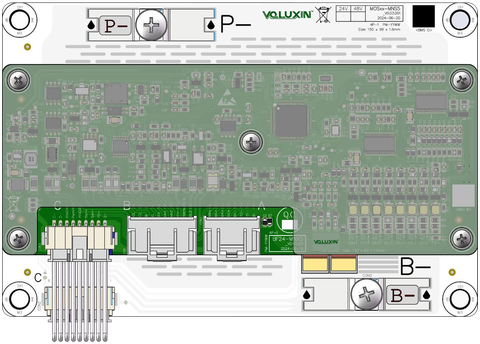
The handbook links BF24-MND3 to pedestrian warehouse vehicles and BF24-MNS5 to stacker applications. MND3 separates a 35A discharge entry from 12A charge; MNS5 lists 100A without separating charge/discharge duty. Port layout and evaluation conditions must be considered alongside these entries.
On small screens, scroll the table horizontally to view every review item.
| Integration topic | What to provide |
|---|---|
| Traction and lifting | Provide separate load profiles, peak durations and regenerative-current conditions. |
| Charge/discharge topology | Choose common or separate paths based on the charger, controller and service arrangement. |
| Installation review | Compare board envelope, connector access and disconnect architecture before sample approval. |
The model is a catalogue discussion reference, not proof of suitability for a particular vehicle. Agree the battery and equipment configuration before ordering.
Tell us what your equipment needs.
Share your application, product requirements and any details you have already confirmed. We can then discuss the available options.
Discuss Your Requirements