
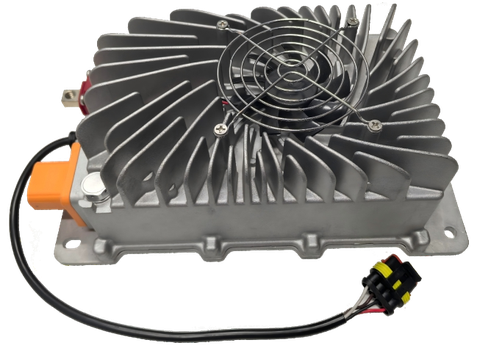
DC-DC POWER CONVERSION
72V DC-DC Converter Range
- Catalogue input platform
- 72V
- Catalogue input range
- 50-100 V
- Catalogue output options
- 14, 27.5 V (variant dependent)
Customisation enquiries welcome.

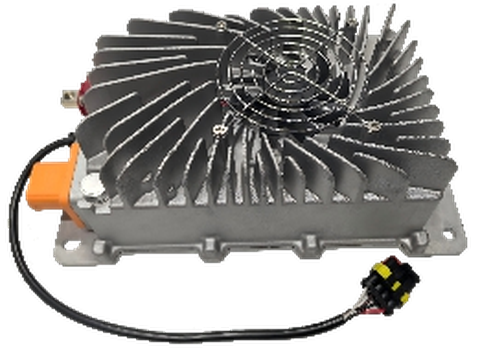
PRODUCT SUPPLY & CUSTOMISATION
Explore DC-DC modules and enclosed converters by input voltage platform. Standard product supply and customisation enquiries are welcome.
Select a model as a starting point. We will discuss your electrical ratings, communication protocol and installation requirements before confirming the ordering configuration.
Catalogue values are reference information. Unconfirmed chemistry, continuous duty and option mappings are not used for precise technical filtering. Final specifications and suitability require configuration review.
Explore 72V, 96V, 144V, 350V, 540V and 800V catalogue platforms. Each series page lists the actual input window, output choices and rated-power entries. Family labels organise the catalogue; they do not replace the complete input specification.
Use the actual 14V, 27.5V and other listed output values when comparing loads. Rated power needs its operating and cooling conditions confirmed.
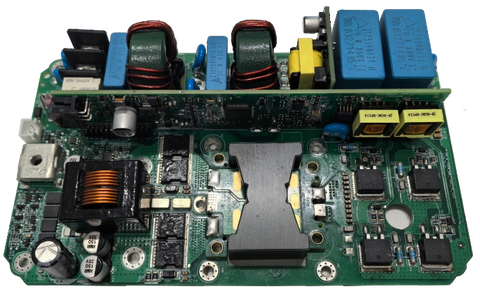
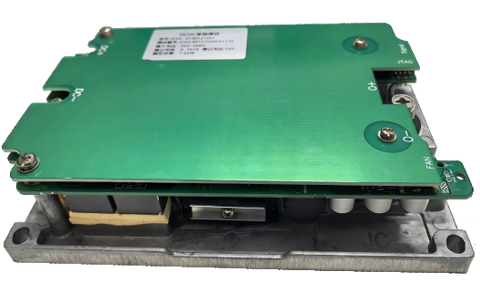
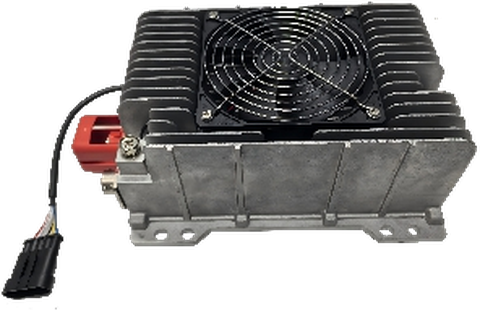
Choose the construction around your equipment integration. Review the outline, mounting and heat path for a module; review envelope, mounting and connections for an enclosed converter. Neither label establishes an IP rating or isolation specification.
Compare modules and enclosed convertersStart with a catalogue reference or your own requirement. Customisation enquiries can cover electrical ratings, communication, connectors and mechanical requirements; feasibility, evaluation and commercial terms are confirmed per project.
Review the supply and customisation processVOLUXIN · CUSTOM PROJECT REVIEW
A custom DC-DC converter must be matched to both the battery source and the auxiliary loads. The supplied power-conversion catalogue describes module and enclosed constructions, wiring options, cooling approaches and protection topics that can be reviewed for a VOLUXIN enquiry.
On small screens, scroll the table horizontally to view every review item.
| Review area | Catalogue-backed starting point | Your customisation input |
|---|---|---|
| Electrical platform | The catalogue separates nominal-voltage platforms and model/output rows. | Specify minimum/maximum input, start-up conditions, each output rail and continuous versus transient load. |
| Control and diagnostics | The solution pages describe CAN configuration and bootloader, UDS and OTA functions. | Identify required control, diagnostic and update functions; availability depends on the selected design. |
| Protection and insulation | Solution pages describe overload, reverse-input, short-circuit, overvoltage and overtemperature protection and input-to-case insulation checks. | Agree fault response and the precise insulation test boundaries; input-to-case data alone do not establish input-to-output isolation. |
| Mechanical and thermal integration | The catalogue describes natural/air cooling and flying-lead or connector arrangements. | Provide enclosure space, mounting, ambient conditions and airflow; request output and efficiency evaluation at those conditions. |
Family-level efficiency, enclosure and compliance statements are not assigned to every catalogue model. The quotation and configuration-specific records define the agreed scope.
DC-DC POWER CONVERSION
Customisation enquiries welcome.
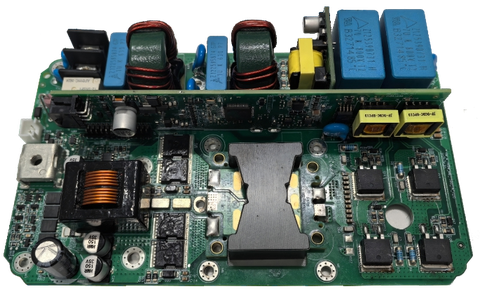
DC-DC POWER CONVERSION
Customisation enquiries welcome.

DC-DC POWER CONVERSION
Customisation enquiries welcome.
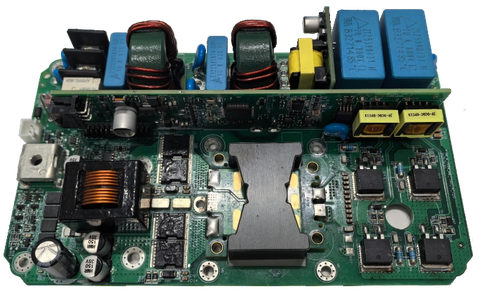
DC-DC POWER CONVERSION
Customisation enquiries welcome.

DC-DC POWER CONVERSION
Customisation enquiries welcome.
DC-DC POWER CONVERSION
Customisation enquiries welcome.
DC-DC POWER CONVERSION
Customisation enquiries welcome.
DC-DC POWER CONVERSION
Customisation enquiries welcome.

DC-DC POWER CONVERSION
Customisation enquiries welcome.
DC-DC POWER CONVERSION
Customisation enquiries welcome.
DC-DC POWER CONVERSION
Customisation enquiries welcome.
DC-DC POWER CONVERSION
Customisation enquiries welcome.
VOLUXIN ENGINEERING REFERENCES
Read catalogue comparison tables and procurement worksheets online, or download an editable CSV. Reference tables reproduce published entries; worksheets are blank review aids, not test results or final engineering specifications.
| Reference | Purpose |
|---|---|
| DC-DC configuration reference | Platform, construction and exact model/output rows; repeated labels remain attached to their range. |
| DC-DC load review worksheet | Source window, auxiliary loads, cooling and evaluation conditions. |
VOLUXIN editorial references · Worksheets updated 5 October 2026; catalogue reference tables dated 2 October 2026. BMS/DC-DC values are based on supplied product catalogues; PCB entries use the 2026 fabrication reference. Request configuration-specific drawings, protocols and evaluation records for the quoted scope.
CONTINUE YOUR ENGINEERING REVIEW
Follow the relevant guide for your procurement scope. A related link does not establish approved compatibility between a component and equipment.
Compare actual source windows, output rails and installation conditions.
Review machinery bus limits, load timing and thermal integration.
Prepare input, output, duty and construction requirements before quoting.
Discuss copper, stack-up and manufacturing notes for your circuit design.