
BATTERY MANAGEMENT
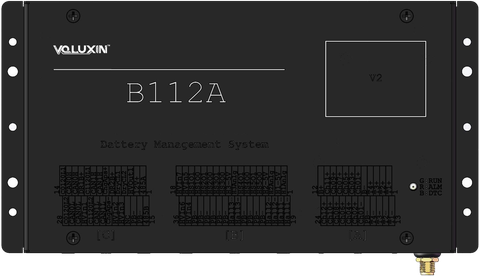
B112A
- Catalogue application
- 24V ride-on warehouse vehicles; 36V ride-on floor scrubbers
- Catalogue series count
- 7-12S
- Catalogue continuous-current entry
- 250A; charge/discharge duty not separated
Customisation enquiries welcome.
BATTERY MANAGEMENT SYSTEM
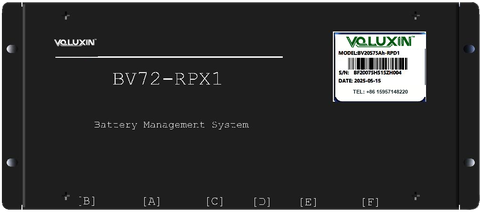
BV72-RPX1 is a battery management system listed for special-purpose vehicles. Use this catalogue reference to start a supply or customisation discussion.
Share the configuration you need. Customisation enquiries are welcome; the final specification and commercial terms are confirmed individually.
Discuss This Model
Conceptual application context. The equipment pictured illustrates the application category, not a specific customer vehicle or confirmed product installation.
APPLICATION CONTEXT
The catalogue application for this reference is special-purpose firefighting robots. The image illustrates the broader equipment category. Review the actual pack, working duty and integration requirements for your vehicle; it does not show a verified installation of this model.
BV72-RPX1 is listed for Special-purpose vehicles. The series-count entry is 17-20S. Match it to your exact pack configuration before comparing current and interfaces.
The published current entry is 150A; charge/discharge duty not separated. The connection entry is Common charge/discharge port. Record driving, lifting or other load periods separately from charging, with duration and operating conditions.
The catalogue lists CAN/485 (isolated); protocol and option to confirm. Confirm the protocol, messages and controller/charger requirements. Review the 155 x 78 x 24 mm envelope against the configuration-specific drawing and connectors.
MODEL SELECTION
This special-purpose-vehicle reference lists 17-20S and 150A with a common port. Review its isolated CAN/485 option against the vehicle controller. Compare with BM72-MPS1 to see why the same envelope does not imply the same current, communication or application specification.
On small screens, scroll the table horizontally to compare all models.
| Selection point | BV72-RPX1 | BA48-MNS11 | BM72-MPS1 |
|---|---|---|---|
| Catalogue series count | 17-20S | 13S or 15S (discrete options, not 14S) | 17-20S |
| Catalogue continuous-current entry | 150A; charge/discharge duty not separated | 50A; charge/discharge duty not separated | 50A; charge/discharge duty not separated |
| Charge/discharge connection | Common charge/discharge port | Separate charge/discharge ports | Common charge/discharge port |
| Communication entry | CAN/485 (isolated); protocol and option to confirm | CAN/485 (isolated); protocol and option to confirm | CAN, 485; configuration to confirm |
| Catalogue dimensions (L x W x T) | 155 x 78 x 24 mm | 174 x 60 x 16 mm | 155 x 78 x 24 mm |
Use these comparisons to prepare an enquiry. Confirm pack chemistry, duty conditions, selected interfaces and mechanical drawings for the ordering configuration.
| Catalogue application | Special-purpose vehicles |
|---|---|
| Catalogue series count | 17-20S |
| Catalogue continuous-current entry | 150A; charge/discharge duty not separated |
| Charge/discharge connection | Common charge/discharge port |
| Communication entry | CAN/485 (isolated); protocol and option to confirm |
| Catalogue dimensions (L x W x T) | 155 x 78 x 24 mm |
This summary reproduces catalogue information. It is not a final engineering datasheet or a certification document.
Download catalogue overview (PDF) · English · Rev 1 · 3 KB
Identify the model and the documents your engineering team needs. We will confirm availability and scope for the proposed configuration.
Customisation is available for discussion. Share your required electrical ratings, communication protocol, connectors, dimensions and operating conditions. Feasibility, the final configuration, evaluation requirements, price and lead time are confirmed individually before an order.
Send Your Customisation RequirementsCONTINUE YOUR PRODUCT REVIEW
These links support comparison; they do not establish interchangeability or approved compatibility.
BATTERY MANAGEMENT
Customisation enquiries welcome.
BATTERY MANAGEMENT
Customisation enquiries welcome.
BATTERY MANAGEMENT
Customisation enquiries welcome.
CONTINUE YOUR ENGINEERING REVIEW
Follow the relevant guide for your procurement scope. A related link does not establish approved compatibility between a component and equipment.
Review battery architecture, lift and travel duty, and procurement questions.
Prepare docking, controller-interface and auxiliary power requirements.
Organize chemistry, series count, duty and communication questions.
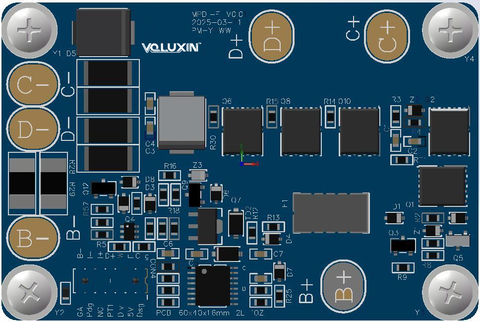
Specify bare-board requirements for your own design; finished BMS supply is a separate scope.